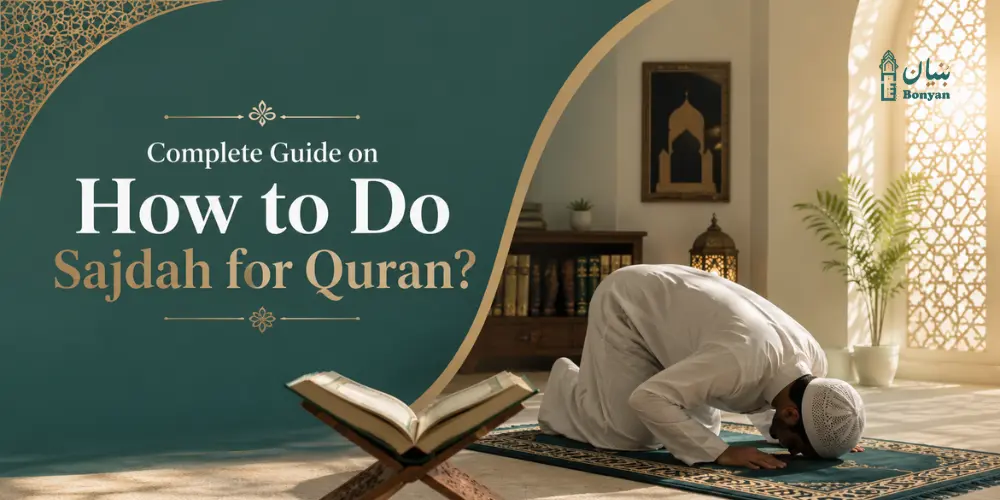
Understanding how to do sajdah for quran allows a Muslim to approach the verses of sajdah with more awareness and humility. Sajdah Tilawah is a beautiful reminder that the Quran is not only read by the tongue, but also answered by the heart and body. This article explains the meaning of Sajdah Tilawah, how it is performed, what to say in it, and how to handle common questions such as listening to recitation, reading without wudu, or teaching children.
How to do sajdah for quran ?
- how to do sajdah for quran is simple in practice, but it should be done with awareness, not as a rushed movement between two verses.
- When you read a sajdah verse or hear it clearly in a recitation, stop for a moment and prepare yourself for one prostration.
- Go down into sujood once, with the same respectful posture used in prayer, keeping your body still enough to feel calmness in the act.
- There is no tashahhud after it, no salam required in many scholarly explanations, and no need to turn it into a full prayer.
- In the sajdah, you may say Subhana Rabbiyal A‘la, while also remembering that this is a moment of submission to Allah’s words.
What Is Sajdah Tilawah ?
Sajdah Tilawah means the prostration of recitation. It is performed when a person reads or listens to a verse of sajdah in the Quran. In most printed mushafs, these verses are marked clearly, so the reader can recognise that this is a special point in the recitation. Understanding how to do sajdah for quran starts with understanding its purpose. This sajdah is not just a physical movement; it is an act of submission to Allah’s words.
Explore our Learn Arabic and Quran Online & Islamic Studies
How to Perform Sajdah Tilawah?
- Sajdah Tilawah is performed after reading or hearing a verse of prostration, and the first step is to complete the verse before going down.
- The person then makes a quiet intention, because this sajdah is an act of worship connected to Allah’s words, not just a reading pause.
- In how to perform sajdah in quran, most learners need to remember that it is only one sajdah, performed with the same respectful posture used in salah.
- You may say takbir before going down according to many scholarly explanations, especially outside prayer, but practices can differ between madhabs.
- While in sujood, say Subhana Rabbiyal A‘la and make du‘a with presence, because sujood is a place of closeness and humility.
- Anyone searching quran sajda how to do it should focus on three things: recognising the verse, prostrating once, and rising with calm respect.
When Should You Perform Sajdah Tilawah?
- You perform Sajdah Tilawah when a verse of prostration is recited clearly, whether you are reading it yourself or listening to someone recite it with attention.
- The sajdah normally comes after finishing the verse, because the prostration is a response to the full meaning of the ayah, not to the first word or middle of the verse.
- If the verse appears during salah, the person leading or praying alone may go down for one sajdah, then stand again and continue the recitation.
- Outside salah, the matter is simpler: you pause your reading, make one sajdah, then return to the Quran or end your recitation naturally.
- A learner studying how to do sajdah for quran should notice the difference between focused listening and hearing a verse in the background without following the recitation.
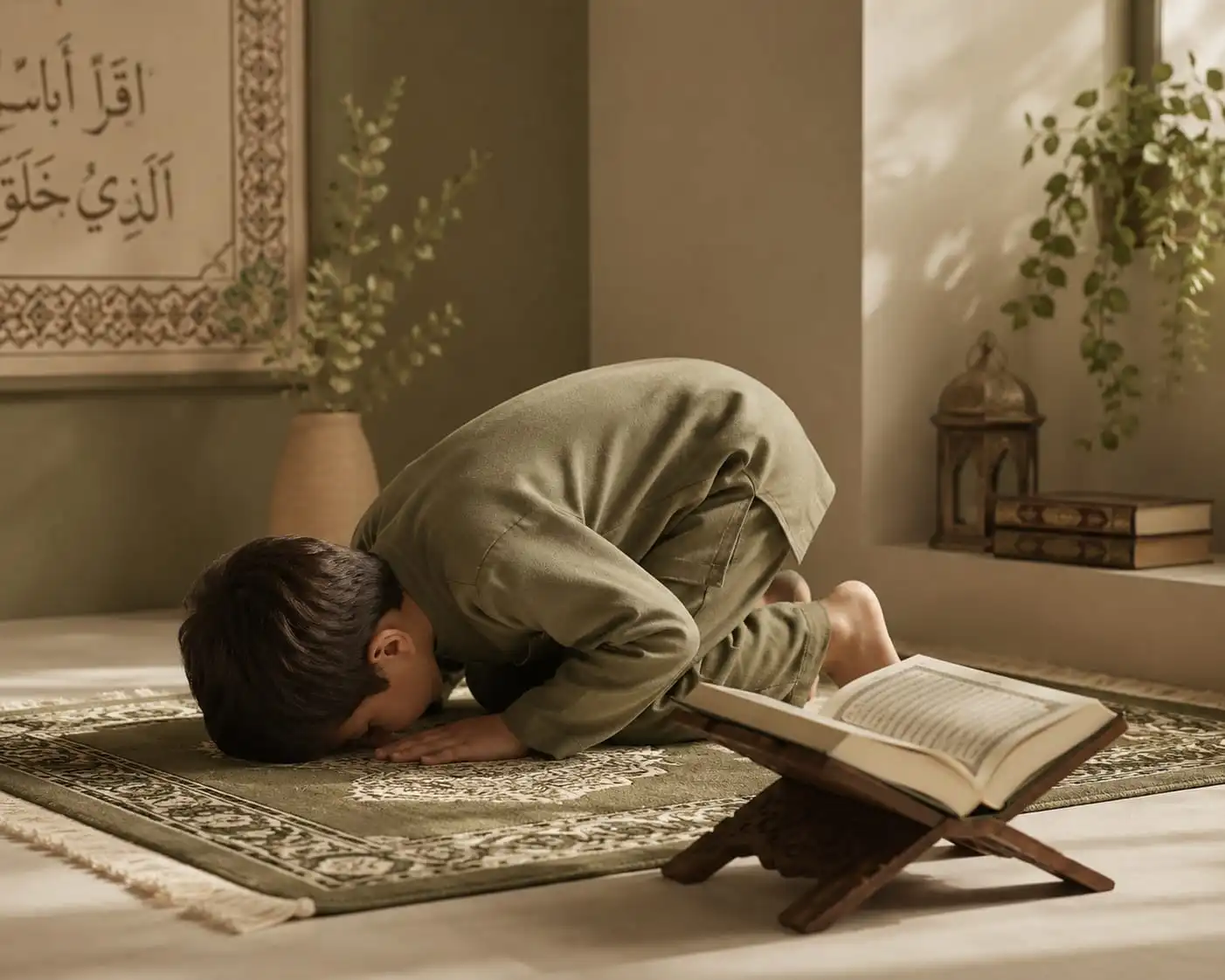
How to perform Sajdah While Reading the Quran?
- When you meet a sajdah verse during your own recitation, finish the ayah first, because the sajdah comes as a response to the completed meaning, not halfway through the verse.
- If you are reading from a mushaf, you will usually see a small sajdah mark in the margin or near the verse, which helps you recognise the place without guessing.
- Outside salah, you can pause your recitation, face the qiblah if possible, and make one calm prostration before returning to your reading.
- The movement should not feel like a break in concentration; it is actually part of honouring the Quran and reacting to its message with humility.
- While learning how to do sajdah for quran, students should avoid rushing down and rising immediately, because stillness gives the act its proper respect.
Explore our Quran Memorization Course
what to say in sajdah tilawah?
- In Sajdah Tilawah, many Muslims say: “Subhana Rabbiyal A‘la”, meaning “Glory be to my Lord, the Most High,” just as they say in the sujood of regular prayer.
- Some learners also use the reported supplication for Sajdah Tilawah: “Sajada wajhiya lilladhi khalaqahu…” which praises Allah as the One who created the face, hearing, and sight.
- A beginner should not feel lost if they only know “Subhana Rabbiyal A‘la”; it is a valid and familiar dhikr for sujood.
- The most important thing is not the length of the words, but saying them with calmness, humility, and awareness of standing before Allah.
- When studying how to do sajdah for quran, students should learn the meaning of the dhikr, not only memorise its sound.
First sajdah in quran in which surah ?
- The first sajdah in the Quran appears in Surah Al-A‘raf, at the end of verse 206, where Allah mentions those who are near Him and how they glorify Him and prostrate.
- This verse comes at the close of the surah, and it teaches a strong meaning: true honour is not in pride, but in worship and submission to Allah.
- Many mushafs mark this place with a sajdah symbol, so the reader can notice it easily while reciting and prepare for Sajdah Tilawah.
- A student learning how to do sajdah for quran should not only memorise the location, but also understand why the verse leads to prostration.
- The verse speaks about humility before Allah, which makes the sajdah feel connected to the meaning, not just to a printed sign.
Explore our islamic studies Course
How Many Sajdah Verses Are in the Quran?
- The common answer to how many ayat sajdah in quran is 15 verses, and this is the number marked in many widely used mushafs today.
- Some scholars count 14 instead of 15 because one sajdah place is treated differently in fiqh, not because there is any difference in the Quranic text.
- The first sajdah in quran appears in Surah Al-A‘raf, verse 206, where the verse describes those near Allah glorifying Him and prostrating to Him.
- Other sajdah places appear across several surahs, including Ar-Ra‘d, An-Nahl, Al-Isra, Maryam, Al-Hajj, Al-Furqan, An-Naml, As-Sajdah, Fussilat, An-Najm, Al-Inshiqaq, and Al-‘Alaq.
- When learning how to do sajdah for quran, students should follow the sajdah marks in their mushaf and the explanation of their Quran teacher.
- The question can you do sajdah tilawah without wudu is a separate ruling related to conditions, not the number of sajdah verses.
Can you do sajdah tilawah without wudu ?
- No, according to the majority of scholars, Sajdah Tilawah should be done with wudu because it is an act of worship similar to sujood in prayer.
- This view treats Sajdah Tilawah with conditions close to salah: purity, facing the qiblah when possible, and covering the ‘awrah properly.
- Some scholars held a more flexible view, especially outside salah, because Sajdah Tilawah is one prostration and not a complete prayer.
- So, when someone asks can you do sajdah tilawah without wudu, the safest practical answer is: renew wudu first if you are able.
- In quran sajda how to do it, purity gives the act more respect and removes doubt, especially for students still learning basic rulings.
learn more about Can you read quran without tajweed ?
How to Do Sajdah for Quran When Listening to a Recitation ?
- When you hear a sajdah verse in a clear recitation, do not rush immediately; first make sure you are actually listening, not just hearing the Quran in the background.
- If the recitation is live, such as behind an imam or with a teacher, Sajdah Tilawah is usually treated more directly than a random recording playing nearby.
- After the sajdah verse is completed, you may perform one prostration if you are able, then sit or return to your previous position calmly.
- This section is part of learning how to do sajdah for quran because listening has its own adab, especially in Quran classes and family recitation.
- Questions like can you do sajdah tilawah without wudu should be checked with your teacher, because scholars differ on some conditions outside salah.
Read more about Quran Hifz Classes Near Me for Ladies
How to Teach Your Child How to perform Sajdah for the Quran ?
- Start with the meaning before the rule. Tell your child that Sajdah Tilawah is a small moment of respect when the Quran speaks about prostration to Allah.
- Show them the sajdah mark in the mushaf, then let them find it themselves in a real verse, so the lesson feels practical.
- Keep the steps short: finish the verse, pause, make one sajdah, say “Subhana Rabbiyal A‘la,” then sit back calmly.
- If your child asks quran sajda how to do it, answer with a demonstration first, then explain the ruling later in simple words.
- A teacher can practise how to perform sujood in quran during short recitation sessions, not long lessons that make the child tired.
- When teaching how to do sajdah for quran, avoid pressure. Children learn this act better when it is linked with love, patience, and the beauty of obeying Allah.
How to Do Sajdah for Quran in Each Madhab ?
| Madhab | Ruling on Sajdah Tilawah | Main Description |
|---|---|---|
| Hanafi | Wajib (obligatory) | Sajdah Tilawah is generally considered wajib when a person recites or properly hears a verse of sajdah. |
| Maliki | Recommended (Mandub/Mustahabb) | It is treated as a recommended act, with consideration given to the situation of the reciter and the setting of recitation. |
| Shafi‘i | Sunnah | Sajdah Tilawah is viewed as a sunnah act that should be performed respectfully and calmly. |
| Hanbali | Sunnah | The Hanbali school also considers Sajdah Tilawah a sunnah practice that carries spiritual reward and respect. |
Note:
The four madhabs agree that Sajdah Tilawah holds an important place in Quran recitation, even though they differ slightly in how they classify its ruling. This is why learning how to perform Sajdah Tilawah through a trusted teacher is always recommended.
Can You Do Sajdah for the Quran on a Chair?
- Yes, you can do Sajdah Tilawah on a chair if going down to the floor is difficult because of illness, age, injury, knee pain, back pain, or weakness.
- The ruling is built around ability. If a person can make normal sajdah safely, they should do that. If they cannot, they do what they can without harming themselves.
- While sitting, the person lowers the head and upper body slightly, making the movement closer to sajdah than ordinary sitting.
- It should still be done calmly. A quick nod does not carry the same sense of respect, especially when the person is able to move a little more.
- This is important for elderly students and people learning Quran at home or online while dealing with physical limits.
What Is The Common Mistakes in Sajdah Tilawah?
- Some learners stop before completing the sajdah verse, but the better habit is to finish the ayah first, then make the prostration with understanding.
- Another mistake is treating Sajdah Tilawah like a full prayer unit, adding ruku, tashahhud, or extra actions that do not belong to this single sajdah.
- Many beginners rush the movement, touching the ground quickly and rising at once, although the sajdah should carry calmness and respect.
- Some people focus only on the physical step and forget the meaning of the verse, even though the sajdah is a response to Allah’s words.
- When learning how to do sajdah in quran, students should ask about the ruling in their madhab instead of mixing different answers without guidance.
- A final mistake is ignoring sajdah marks completely during recitation, especially when reading from a mushaf that clearly shows where Sajdah Tilawah appears.
Conclusion
Learning how to do sajdah for quran becomes easier when the learner understands the meaning before memorising the steps. Sajdah Tilawah is a quiet moment during recitation, where the reader stops and responds to Allah’s words with humility. Through clear Quran lessons at bonyan Academy , students can learn when to make this sajdah, what to say, and how to handle different situations without confusion. The main goal is not only correct movement, but a calmer and more respectful connection with the Quran.Contact us and get the free trial
FAQs
Do I need to say anything special in Sajdah Tilawah?
You can say “Subhana Rabbiyal A‘la.” Some people also learn the longer du‘a, but the basic dhikr is enough for many beginners.
Can I make Sajdah Tilawah later?
It is better to do it when you reach the verse, as long as you are ready. If you missed it, ask your teacher what to do according to the madhab you follow.
What if I hear a sajdah verse from a recording?
If you are listening carefully, many learners treat it seriously and make sajdah. If it is only background sound, the ruling may not be the same.
Is Sajdah Tilawah hard to learn?
No. Once someone shows you the sajdah mark and the basic step, it becomes simple. The main point is to make one calm sajdah with respect.