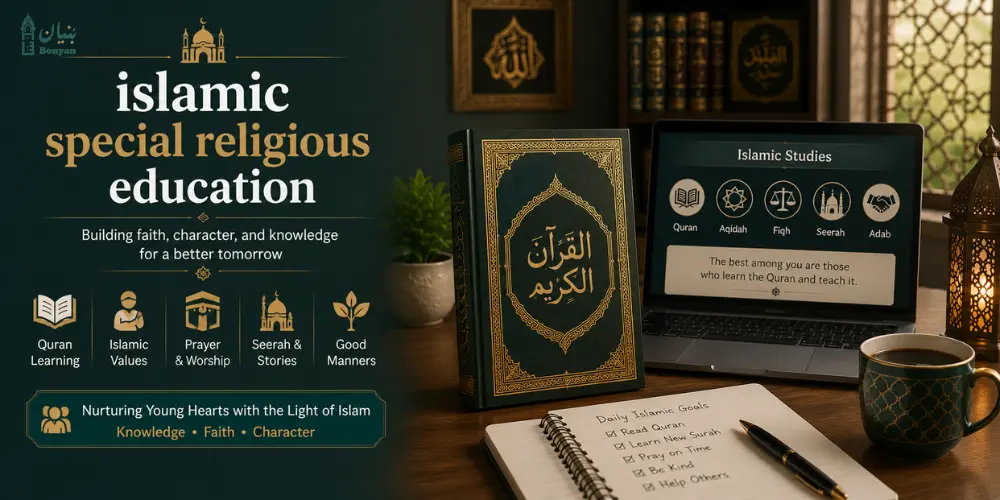
Muslim parents often want their children to understand Islam as more than a list of rules or facts to memorise. Islamic Special Religious Education gives young learners a structured way to study the Quran, worship, good manners, and the values that shape everyday Muslim life. It can also help children understand Muslim religion beliefs while learning how faith guides their choices at home, at school, and among friends. This guide explains what a strong Islamic education program should offer and how Bonyan Academy can help families choose learning that suits their child’s age, needs, and current level.
What Is Islamic Special Religious Education and Why Does It Matter ?
Islamic Special Religious Education is the teaching of faith in a way a child can understand and use. It brings together belief in Allah, Quran, prayer, Seerah, manners, and the small choices made each day. Rather than asking children to memorise a list of answers, it gives them room to ask why, listen, and make sense of what they learn.
That matters because children are forming their view of themselves, other people, and the world around them. Clear religious teaching can steady that process. It helps them recognise what Islam asks of them, speak about their faith without embarrassment, and connect worship with behaviour. Parents also gain a shared language for discussing mistakes, questions, and new experiences at home together.
read more about Enrich Your Faith with the Best Islamic Online Courses
The Complete Guide to Islamic Special Religious Education for Muslim Families:
- Islamic special religious education works best when lessons grow with the child. Younger learners may begin with Allah’s names, short surahs, and simple manners, while older children can explore intention, accountability, and the reasons behind worship.
- Families should not separate knowledge from practice. Teaching islamic prayer times should also include wudu, facing the qiblah, what breaks prayer, and how to make salah part of a normal school day.
- A sound course explains the basics of islam religion without reducing them to dry definitions. A sound course explains belief in Allah, the prophets, revelation, angels, the Last Day, and divine decree through age-appropriate examples and honest discussion.
- Parents can support learning by asking what the child understood, not only what was memorised. A short conversation after class often reveals confusion that a worksheet misses.
- Real progress appears in small changes: better recitation, fewer reminders for prayer, more thoughtful questions, and kinder behaviour with siblings, teachers, and friends, inside and outside the home.
7 Key Benefits of Islamic Special Religious Education for Muslim Kids:
- Islamic Special Religious Education gives children regular contact with Islamic knowledge instead of leaving faith learning to occasional reminders at home.
- It explains worship step by step, including wudu, salah, dua and the reason Muslims organise parts of the day around islamic prayer times.
- Children learn that good character is an act of worship, not simply a list of rules for avoiding punishment.
- Reliable teachers can correct misunderstandings early and distinguish authentic Islamic teaching from cultural habits or online misinformation.
- Studying muslim beliefs in context helps children understand tawheed, Prophethood, the Hereafter and personal accountability.
- Lessons provide a respectful place for difficult questions, which can protect children from feeling embarrassed or silently confused about their faith.
- When local Islamic learning options are limited, online study can provide access to qualified teachers, online study can give families steady access to qualified teaching and clearer progress.
Learn more about islamic studies Course
How Islamic Education Helps Build Strong Character and Values?
- Children do not build character by memorising a list of good manners. They understand it when a lesson shows them what to do after lying, hurting someone or breaking a promise.
- Islamic Special Religious Education links these everyday moments to accountability before Allah. A child learns that honesty still matters when admitting the truth feels uncomfortable.
- Studying islam religion beliefs also gives meaning to repentance. Making a mistake is serious, but Islam teaches children to admit it, seek forgiveness and repair the harm where possible.
- Stories from the Quran and the history of Islam give these ideas a human shape. Patience is easier to understand when children see how believers responded to fear, loss or unfair treatment.
- Teachers can then discuss situations from school: copying an answer, leaving someone out, spreading a rumour or refusing to share.
- The result is not perfect behaviour overnight. It is a child who slowly learns to pause, think and make a better choice next time.
How Islamic Special Religious Education Builds Faith and Academic Success Together?
- A child who sees learning as part of their duty to Allah may approach school with more care. That does not mean every lesson becomes easy, but it can give effort a reason beyond marks.
- Islamic Special Religious Education also gives practical meaning to honesty. Copying homework, hiding a poor result or taking credit for someone else’s idea are discussed as matters of character, not merely school rules.
- Quran study asks children to slow down, notice detail and repeat carefully. Those habits can support reading and memory, especially when the teacher checks understanding rather than rewarding repetition alone.
- Prayer can also help organise the day. Some children find it easier to plan homework when study, rest and salah each have their place.
- When results are disappointing, Islamic teaching encourages patience without pretending that patience means doing nothing. The child may still need extra practice, clearer teaching or help from a parent.
- Religious education cannot promise higher grades. It can, however, nurture steadier effort, humility and a healthier attitude towards success.
Read more about Revelation Recording and Memorisation of the Holy Quran
The Role of Islamic Special Religious Education in Raising Confident Muslims:
- A child may recognise Islamic words yet still feel unsure when someone asks what they mean. Confidence begins when knowledge becomes clear enough to use outside the lesson.
- Islamic Special Religious Education helps children connect belief with familiar situations: praying during a busy day, declining unsuitable food or answering questions about Ramadan.
- Teachers can show them that firmness does not mean rudeness. It is possible to hold an Islamic boundary and still speak gently.
- Children also need room to ask awkward questions. When questions are dismissed, confusion often remains; when they are handled carefully, trust grows.
- Quranic accounts introduce different forms of courage, including patience under pressure, speaking truthfully and turning away from harmful behaviour.
- Confidence should never be measured by how much a child talks. A quiet child may still have a secure identity and make strong choices.
- The real sign of progress is that the child understands their faith, knows where to seek answers and feels less pressure to hide who they are.
What Should a Quality Islamic Education Curriculum Include?
- A proper curriculum does not begin with random stories. It gives children an ordered path through tawheed, prophets, revelation, worship, and the Hereafter.
- Quran learning should bring together sound recitation and understanding. Memorising words without discussing meaning leaves an important part of the lesson unfinished.
- Children also need to practice wudu and salah, learn what breaks them, and understand when common exceptions apply.
- Islamic Special Religious Education should present islam religion beliefs clearly enough for children to ask questions and explain what they have learned.
- Seerah and the history of Islam belong in sequence. Dates are less important than understanding why events happened and what followed.
- Adab should not remain a list of ideal qualities. Lessons can examine lying, jealousy, apologies, privacy, friendship, and the use of phones.
- The program should revisit topics at increasing levels of depth as the child grows.
- Short discussions, demonstrations, and parent feedback reveal understanding more accurately than worksheets filled in from memory.
Read more about Online Hifdh Program for Kids Adults and Sisters
How to Choose the Best Islamic Special Religious Education Program for Your Child?
- Begin with your child’s actual level. Note what they can recite, which parts of salah they understand and where they still need patient guidance.
- Review the curriculum carefully. Lessons should move in a clear order through Quran, aqeedah, worship, seerah, and Islamic manners instead of presenting unrelated topics each week.
- In Islamic Special Religious Education, the teacher’s approach matters as much as qualifications. Children need correction that is clear but never humiliating, especially when they are still building confidence.
- Ask how progress is checked. Recitation, discussion, and practical tasks reveal far more than worksheets completed from memory.
- Class length, timing, learning materials, and parent feedback should also suit the family’s routine.
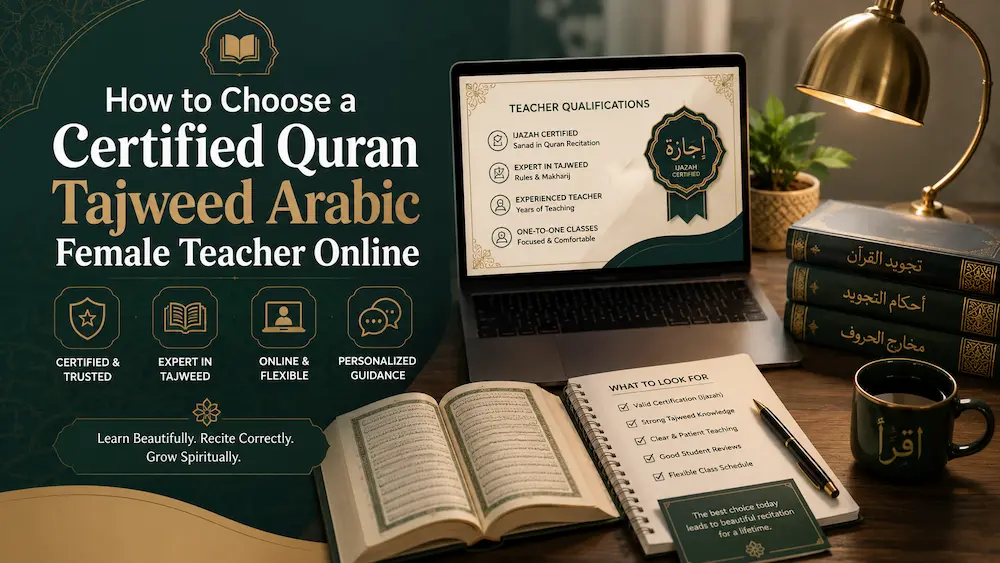
- Bonyan Academy is a strong option for parents seeking structured online Islamic lessons, supportive teachers and learning suited to the child’s age and ability.
- A trial class can help you judge whether your child feels comfortable, involved and ready to continue.
Islamic Special Religious Education vs Secular Schooling:
| Point | Islamic Special Religious Education | Secular Schooling |
|---|---|---|
| What children learn | It gives space for Quran, salah, seerah and questions about Allah that would not normally be explored in a mainstream classroom. | A child may spend most of the week learning maths, science and languages without ever discussing how faith shapes everyday choices. |
| How Islam is presented | An Islamic teacher can explain why Muslims pray, fast and follow halal boundaries, then help children connect those teachings with school and family life. | Secular schools may cover the history of Islam or describe Islam religion during religious studies, but the lesson is usually about information, not personal practice. |
| Main value | Islamic classes help children understand Muslim religion beliefs from within the faith rather than as an outside topic. | Children still need strong literacy, scientific understanding and experience working with people from different backgrounds. |
| Role in daily life | It helps children see how faith can shape behaviour, worship, family life and everyday choices. | It gives children the academic knowledge and wider social experience they need in everyday life. |
| Best overall approach | Islamic education fills the religious gap that mainstream schooling does not usually cover. | For many families, the two forms of education work best together, with each covering an area that the other does not provide. |
Islamic Special Religious Education for Reverts and New Muslims:
- The early weeks after accepting Islam can feel joyful and confusing at the same time. New Muslims often hear more advice than they can reasonably follow.
- Islamic Special Religious Education should begin by making the essentials clear: who Allah is, what the shahadah means and how a Muslim prepares for prayer.
- Salah is best learned through practice. A teacher can demonstrate the movements, explain what is recited and correct mistakes without making the learner feel ashamed.
- Short Quran passages should be introduced with meaning, not pronunciation alone, so worship does not feel mechanical.
- Reverts may also need help dealing with relatives, workplace questions or uncertainty about food and social occasions.
- A sound course separates religious obligations from personal customs and avoids presenting one community’s habits as universal Islam.
- Progress should remain manageable. Learning one act of worship properly and maintaining it is more valuable than rushing through many subjects that are soon forgotten.
Read more about Words From Quran With Meaning for Better Understanding
Why Bonyan Academy Is One of the Best Islamic Courses Online?
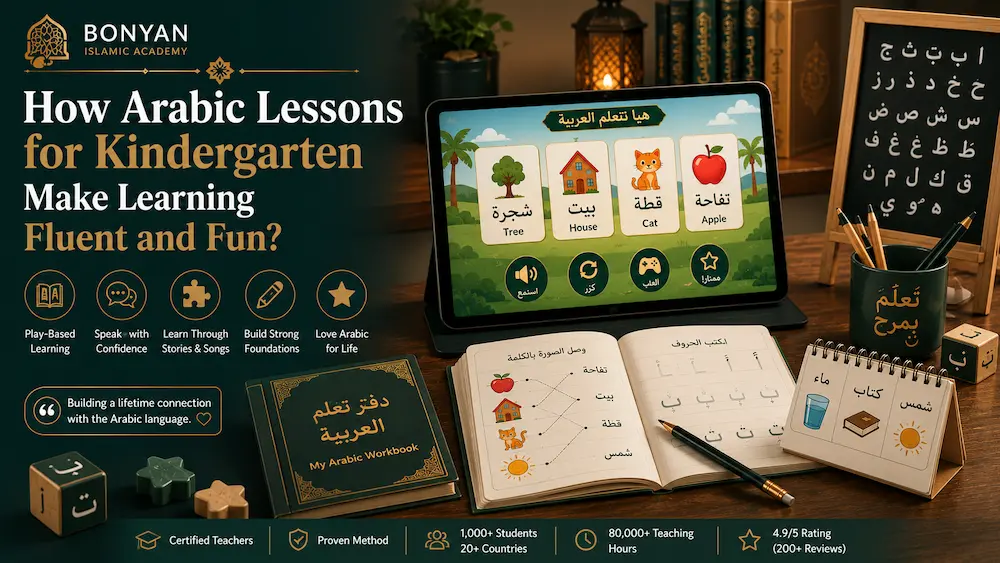
- A useful Islamic course should leave the student knowing what comes next. Bonyan Academy offers organised learning in Quran recitation, Tajweed, Hifz, Arabic and Islamic studies.
- The programme does not treat every learner as a beginner. A child working on short surahs needs a different plan from an adult improving Tajweed or studying fiqh.
- Through Islamic Special Religious Education, students explore aqeedah, worship, seerah and Hadith with a teacher present to explain unfamiliar ideas.
- Live correction is especially valuable in Quran study. Students can notice pronunciation mistakes immediately before they become difficult habits.
- Online access also helps families who cannot attend a suitable mosque class regularly because of distance, school hours or limited local provision.
- A free trial lesson gives parents and adult learners the chance to judge communication, lesson pace and comfort before enrolling.
- Bonyan Academy therefore stands out through continuity: learners can begin with the foundations and keep progressing without changing platforms whenever their needs develop.
Conclusion
Children and adults learn best when Islamic knowledge is clear, ordered, and connected to daily life. The purpose of Islamic Special Religious Education is not simply to complete lessons, but to build understanding that appears in prayer, choices, manners, and confidence. Bonyan Academy brings Quran, Arabic, and Islamic studies into one online learning space, with live guidance for different ages and starting levels. Do not leave religious learning to scattered videos or occasional classes. Browse the courses, arrange a trial lesson, and choose a program that gives your family reliable teaching, regular support, and a practical route towards lasting Islamic growth.
FAQs
What Is Islamic Special Religious Education?
Islamic Special Religious Education is structured teaching that helps learners understand Quran, aqeedah, worship, seerah and Islamic character. It goes beyond memorising facts by showing how faith shapes prayer, behaviour, family life and everyday decisions.
What Age Should a Child Begin Islamic Education?
Children can begin with simple Islamic learning from an early age. Short duas, stories of the Prophets, and basic manners may come first. As they grow, lessons can introduce Quran recitation, wudu, salah, and Muslim religion beliefs at a level they can understand.
Can Islamic Education Support a Child Who Attends a Secular School?
Yes. Secular schools usually focus on academic learning and may only discuss the Islam religion as part of general religious studies. Islamic classes give children separate guidance in worship, the Quran, and Muslim identity without replacing their school education.
What Muslim Parents Need to Know About Islamic Special Religious Education?
Muslim parents should look beyond lesson titles and check how the program actually teaches. A suitable course should cover the Quran, aqeedah, worship, seerah, and Islamic manners in a clear order.